How to Write an AI Trading Prompt You Can Test
Define the evidence, position limits and exit rules your AI needs. Includes a prompt you can copy and an AI Arena comparison to try.
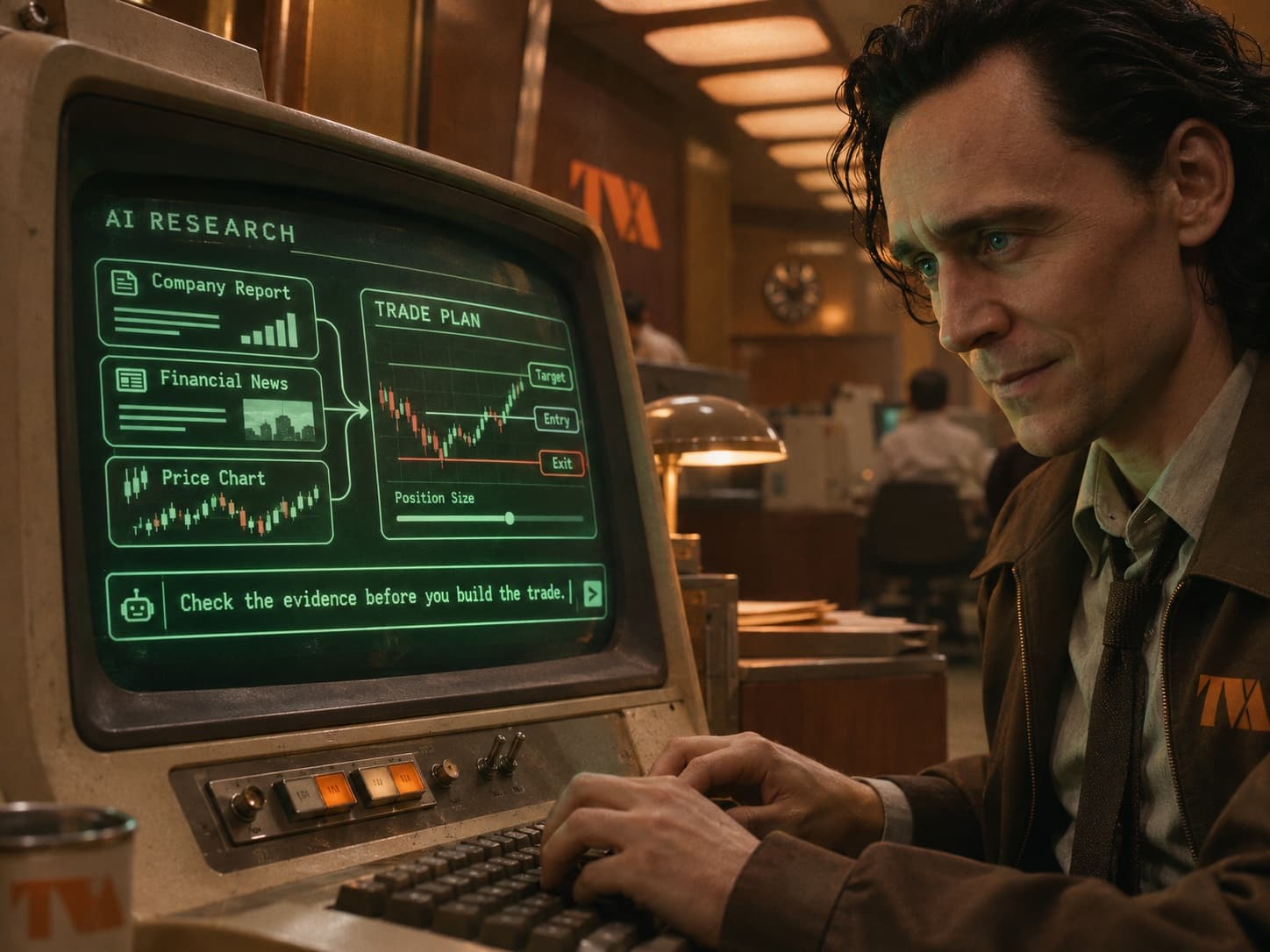
Say a stock jumps from $48 to $50 after an earnings headline. Your AI has been told to “buy strong earnings breakouts.” Sales rose last quarter, but management just cut its forecast for the rest of the year. Would you want the AI to buy?
If the cut would keep you out, write the rule you actually mean. “I want to buy companies that just raised their sales forecast. Before considering an entry, show me the old and new forecasts for the same fiscal year.” Now you can check the AI’s work. A chart can show you that buyers paid $50. You need the company’s numbers to know whether it met your condition.
Define the decision you’re handing over
Start with the decision you want back. “Find something worth reading tonight” gives the model a different job from “Decide whether to add a position to this portfolio at the next review.” For research, ask for an idea and the evidence you would need before acting. For a trading strategy, specify what it may own, how long an idea has to work, and when it may take action. Set account permissions and hard limits in the platform itself.
A company can have excellent five-year prospects and still give you no reason to buy it for the next five days. For a short holding period, ask what could move the price during those sessions. If you buy for years, ask how the new forecast changes what the business is worth.
Tell it what would count as evidence
In a BrokerBridge test on November 4, 2026, we asked two AI models about Microsoft’s latest earnings and its recent share price. One pulled a month of prices and the other pulled six months. Both said they couldn’t verify the earnings. A longer chart would still have left us with the same question.
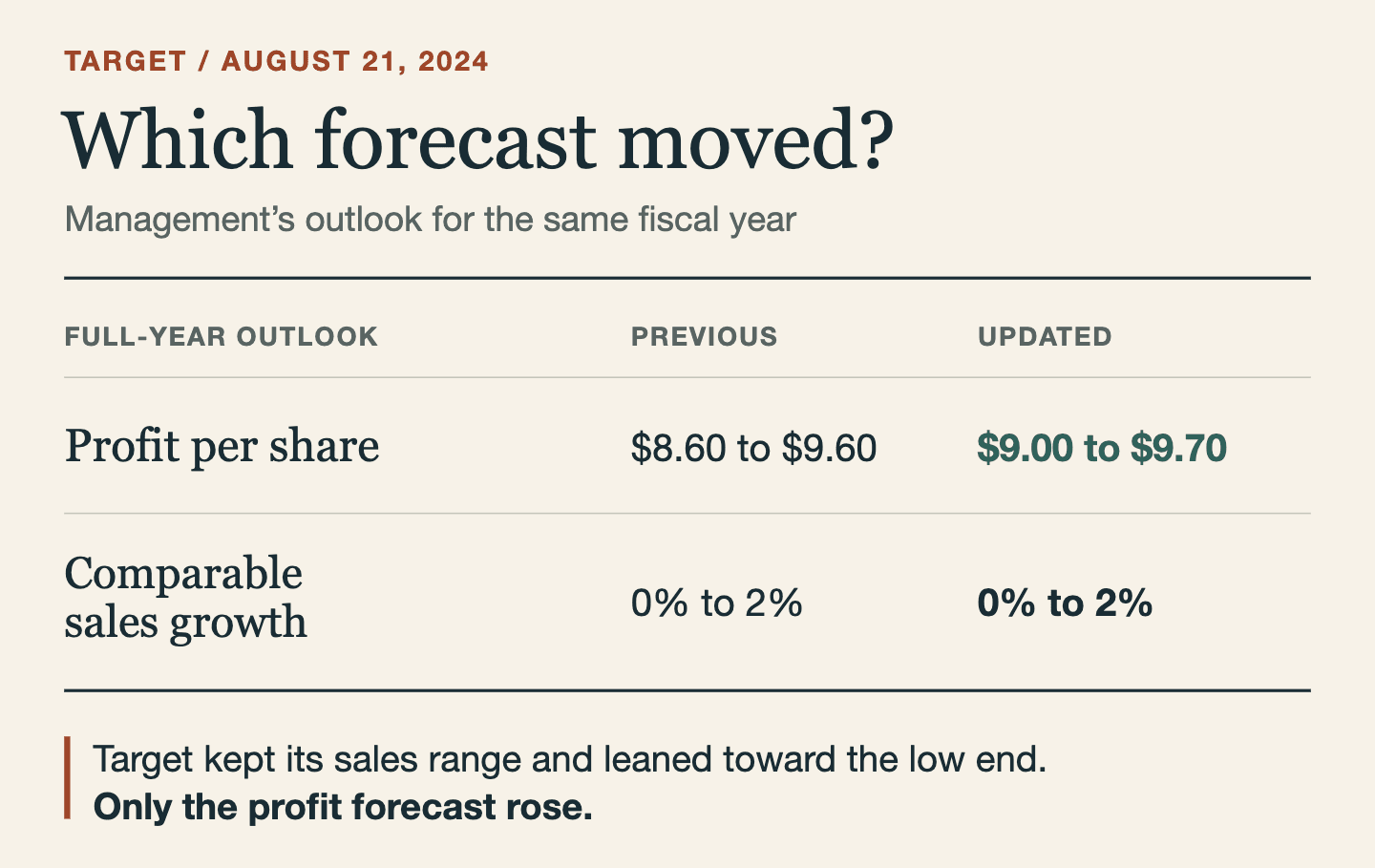
Look at Target’s August 2024 earnings release. The company raised its full-year forecast for profit per share to a range of $9.00 to $9.70, up from $8.60 to $9.60. Its forecast for comparable sales, a measure of growth in its established retail business, stayed at 0% to 2%. Target now expected the lower half of that range. If your rule required a better outlook for those sales, the release gave your AI a reason to pass. If you wanted rising profit expectations, the same release gave it a reason to keep researching. Target’s earnings release
Choose the source to fit your trade. For an earnings idea, ask for the company’s release. Many U.S. companies also attach it to a public filing called an 8-K. SEC guide to reading an 8-K
Other kinds of trades call for different tools. If you trade stocks that gain faster than their peers, compare the stock and its sector over the same dates. If you trade short moves, check the bid and ask, the best prices buyers are offering and sellers are asking. A wide gap between them can eat up the move you hoped to capture. If you buy an option ahead of earnings, ask how much movement its price already assumes. A stock can move in the direction you expected and the option can still lose value. SEC guide to bid and ask · Options Industry Council on earnings and option prices
Ask for the source and its time, then a sentence explaining what the model infers from it. If a stock rises 4% while its sector gains 5%, how much of the move can the model reasonably credit to the company’s news? If the decisive source is missing, a useful answer names it and tells you what would justify another look.
Put a dollar amount behind “small position”
Suppose your account holds $40,000. You allow $100 of planned loss on one idea and at most $2,000 invested in one stock. At a $50 entry, you decide the original idea stops making sense at $48. That $2 difference gives you room for 50 shares under the loss budget. But 50 shares would cost $2,500. The position limit brings the size down to 40 shares, or $80 of planned price risk before costs. If price gaps through $48, the actual loss can be larger. CME on position sizing · SEC on stop orders
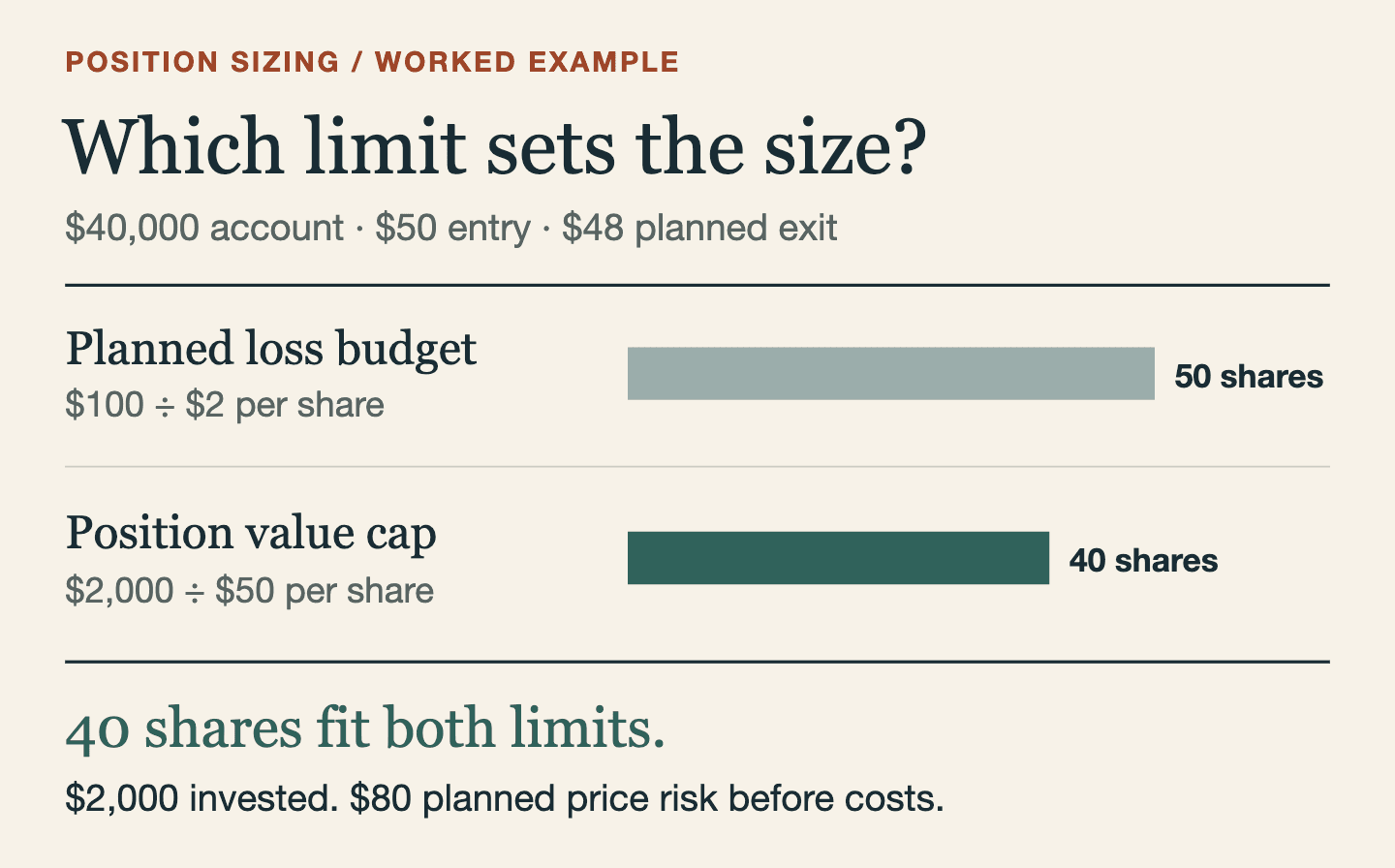
Choose your own numbers. Ask which limit determined the size. Have the AI check what you already own. A new chip stock can fit the limit for one position while adding to the same industry exposure as several existing holdings.
Give the next review a job
Back to the hypothetical $50 stock. This time the company did raise its forecast. You bought expecting the stock to hold its gain as investors absorbed the news. At the next review, it’s trading at $49.60. If the original idea depended on buyers defending $48, ask how the stock traded around that level. If management withdrew its forecast overnight, ask whether the reason for owning the shares still holds even above $48. A price level and a change in the business can each give you a reason to exit.
Before the first entry, ask for a short note you can revisit. What justified buying at this price? What would cause an exit? When will the idea have had enough time? At the next review, read that note alongside the new evidence. If the answer switches from “a move over five days” to “a business we can hold for years,” you can see exactly which instruction needs tightening.
Try one change in AI Arena
Open AI Arena in BrokerBridge and start setting up your own Arena. Choose Write the instructions with AI and give the setup chat the prompt below. You can ask it to adapt the example to your holding period or the assets you follow. Open Review drafted instructions, then Use these instructions in setup when the wording matches what you meant. Check the position limit and review schedule in setup too. Build your AI Arena
To see whether one sentence earns its place, select one model with no investing persona and choose Compare two prompts on one model. Put only the rules both versions should follow in any shared instructions field. Under Rules, use Second prompt for the alternative. Try “verify the earnings news” in one version and “cite the new and prior sales forecasts for the same fiscal year” in the other. Keep the other settings alike.
After several reviews, open the releases each version cited. In how many decisions did the figures match? When a figure was missing, did the model wait? Compare those answers before you look at returns and the losses along the way. A profitable trade can still reveal a model that ignored your rule. Anthropic’s guide to evaluating prompts
Copy this AI trading prompt
This example is for a trader buying U.S. stocks for two to ten sessions. Change the market, time horizon and illustrative limits to fit your approach. You can paste it as written to start an Arena draft.
Look for opportunities to buy among this portfolio’s selected U.S. stocks and hold for two to ten trading sessions. Work within its configured permissions. Start each scheduled review with current market conditions and any upcoming event that could change the decision. Check existing holdings against their original reasons for entry and exit conditions.

For a new idea, describe what changed and why it could matter during my holding period. Compare an eligible alternative, including keeping cash. Check whether a move across the market or sector explains what you see. Use sources that can answer the question. For a forecast change, give the company’s new and previous figures for the same metric and fiscal period. Name the source and when it was available. Separate what you observed from what you infer.

Give the strongest reason to pass. If decisive evidence is missing, or the available price is too old to judge an entry, wait on that purchase. Say what would make it worth checking again.

For an entry, state the price condition, the level or event that would invalidate the idea, and when to take profits or exit on time. Limit planned loss per trade to 0.25% of portfolio value. Cap the total value of any one position at 5% of the portfolio. Give the resulting share count and show which limit determines it. Check current holdings, available cash and stricter platform limits. Account for trading costs. If you cannot estimate the planned loss, or no whole share fits, pass.

Leave a brief decision note. State the action and the evidence that decided it. At the next review, compare what happened with what you expected before changing the plan.